
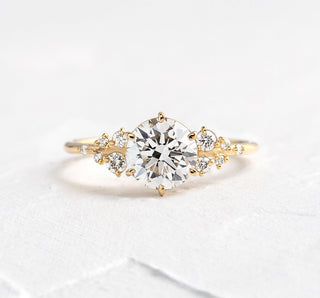


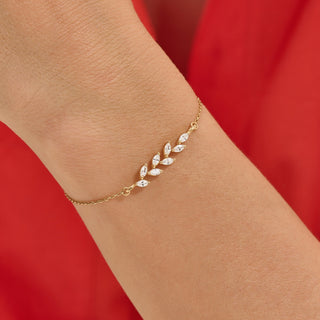

The choice comes down to how the ring is constructed. A ring isn't just a piece of metal with shiny stones stuck on top. This year, we are seeing a massive shift toward heavier settings. The trend of paper-thin bands is dying because they simply do not last. When you are looking at wedding rings for women, you have to think about the profile height. If the band sits too high, it hits everything.
We tell our clients to look closely at the under-rail of the ring. This is the hidden metal bar that supports the prongs. A thicker under-rail means the prongs will not bend when you accidentally hit your hand against a kitchen counter. If you choose an eternity band, where diamonds go all the way around, that metal support is even more critical. Without it, the ring will flex when you grip things tightly. That flexing pops diamonds right out of their settings.
Metal Configurations for the Best Diamond Wedding Rings for Women
The metal dictates the lifespan of the piece. Platinum is the standard for security. It doesn't lose metal when scratched; the metal just shifts. Gold, on the other hand, wears away microscopically over decades. If you match an 18k yellow gold band with white gold diamond engagement rings for women, the harder metal will slowly chew into the softer one. Always match your metals.
Let's break down how these metals hold up on a workbench over time:
- Platinum: Heavy. Scratches easily but never loses volume. Prongs stay exactly where they are set.
- 18k Yellow Gold: Classic look. It is softer, meaning the prongs need checking every year.
- 14k White Gold: Harder than 18k because of the alloys used. It requires rhodium plating every 18 months to keep its bright white sheen — it fades to a dull yellowish tint.
- 10k Gold: Highly resistant to daily wear and scratching due to the massive alloy content. Sizing this later can be a headache. The metal gets brittle. Jewelers have to apply significantly more heat and pressure to move prongs, which increases the risk of snapping them entirely if a stone needs resetting down the line. The color runs pale.
- Mixed Metals: We often build bands with yellow gold shanks but platinum prongs. This gives you the warm gold aesthetic while ensuring the diamonds are held by the strongest possible material.
Diamond Cuts and Settings for the Best Diamond Wedding Rings for Women
The setting style determines whether you will be visiting a jeweler constantly for repairs. Pavé settings look like a solid line of fire, but they use tiny beads of metal to hold the stones. One hard knock can shear those beads off. If you work a lot with your hands, channel settings are far smarter. The diamonds are locked between two long walls of precious metal. They cannot snag.
We also notice a surge in east-west settings for elongated shapes. Setting an oval or emerald cut horizontally keeps the ring low-profile. It spreads the weight across the finger beautifully.
| Setting Style | Diamond Protection | Resizing Difficulty | Practical Longevity |
|---|---|---|---|
| Bezel | Maximum | Moderate | Decades without prong wear |
| Channel | High | Difficult | Excellent for active professions |
| Shared Prong | Medium | Easy | Requires bi-annual prong checks |
| Surface Pavé | Low | Very Difficult | Stones will drop over time |
Designing for Daily Comfort and Cohesion
Your wedding band needs to sit comfortably next to your engagement ring. Many women buy a straight eternity band only to find out it hits the basket of their engagement ring. This leaves a massive, awkward gap. Over time, the two rings rub against each other like sandpaper. This friction thins out the metal and can loosen the diamonds on both pieces.
To fix this, we design contoured or curved bands. These are engineered to trace the exact footprint of your engagement ring. When worn together, they lock into place like a puzzle. If you prefer wearing your wedding band alone sometimes, a slight curve still looks intentional and standalone. Think about how often you plan to wear the band by itself before committing to a dramatic curve. Some curves look strange when worn alone, turning upside down or looking incomplete. We solve this by making the curve subtle, or creating a notched band that hides the cutout under the engagement ring basket.
Another factor is diamond color matching. If your main engagement diamond has a high color grade like D or E, putting G or H color small diamonds next to it will make the band look yellow. Matching these stones to existing diamond engagement rings for women requires a trained eye. We hand-select every single melee diamond under a microscope to ensure the color and clarity perfectly complement your existing ring. We don't just pull stones from a generic parcel. We check the tint under north-facing daylight lamps because store lighting can hide imperfections.
Common Questions When Buying a Wedding Band
How do I choose between different wedding rings for women if I have an active job?
If you work in healthcare, fitness, or any field where you use your hands constantly, avoid prongs. Choose a bezel or channel setting. These styles sink the diamonds into the metal, removing any sharp edges that can tear gloves or scratch patients.
Why do some diamond engagement rings for women not sit flush with a wedding band?
It depends entirely on the setting design of the engagement ring. If the center stone's basket is set low to the finger, a straight band will hit the basket and create a gap. You will need a curved or open-front band to bypass that metalwork.
How often do the diamonds in a wedding ring need to be checked?
We recommend bringing your ring in every six months. We put the piece under a microscope and physically tap each stone to check for movement. Daily impacts loosen prongs over time, and catching a loose stone early saves you the cost of a replacement.
What is the practical difference between a full eternity and a half eternity band?
A full eternity has diamonds around the entire loop. It looks spectacular but cannot be resized easily because there is no plain metal to work with. A half or three-quarter eternity leaves a small sizing bar at the bottom. This makes future resizing simple and prevents the bottom diamonds from getting crushed when you grip heavy objects.
Why do small diamonds sometimes look cloudy or dull in retail stores?
That happens when manufacturers use cheap, poorly cut stones called single-cuts. They only have 17 facets. We only use full-cut diamonds with 58 facets, even for the tiniest stones. A well-cut small diamond will reflect just as much light as a two-carat center stone.
How do I clean my ring at home without damaging the metal?
Skip the harsh chemical cleaners. Use warm water, a few drops of standard blue dish soap, and a soft-bristled toothbrush. Soak the ring for ten minutes to break down hand lotions and oils, then gently scrub underneath the diamonds where dirt accumulates.
The Long-Term Reality of Fine Craftsmanship
Investing in a wedding ring requires looking past the initial showroom sparkle. A ring that shines under high-intensity store halogen bulbs might look completely dead when you walk outside into natural light. You need to focus on weight, metal thickness, and prong construction. Cheaper rings feel light because the manufacturer hollowed out the inside of the band to save on metal costs. This traps moisture against your skin, causing rashes, and leaves the ring vulnerable to bending out of shape.
At Aurous, we build rings from the ground up to ensure they handle the realities of daily life. We focus on bench-led craftsmanship rather than mass production lines. We weigh the metal, test the stone spacing, and make sure the profile sits exactly where it should on your finger. Stop by our store or check out our digital collections to see how we build jewelry meant to last a lifetime.