
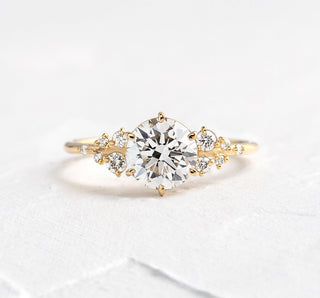


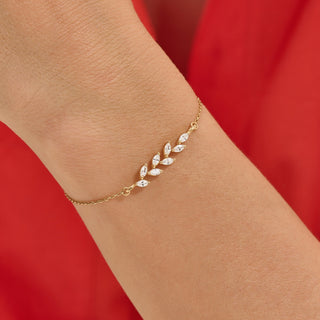

You want a ring that looks good today and thirty years from now. Trends shift fast. A halo setting that sold out three years ago might look dated next season. When clients sit across our desks, they usually start by asking about current trends, but they almost always buy traditional designs. A solitary stone on a plain metal band does not compete with changing fashion cycles. You avoid the problem of looking at your hand a decade later and regretting a hyper-specific design choice. Let's look at the actual designs buyers choose when they want permanence.
The Most Popular Classic Engagement Ring Styles 2026
Evaluating the most popular classic engagement ring styles 2026 requires looking at structural integrity, not just visual appeal. The six-prong solitaire remains the default choice for a reason. Four prongs leave the corners of a round diamond exposed to chips if you hit your hand against a hard surface. Six prongs offer security. We see this daily. Someone brings in a four-prong ring with a loose center stone because a single prong is bent on a car door. Six prongs distribute the tension evenly across the stone.
Here is a breakdown of the specific profiles buyers request in our showroom right now.
| Style Profile | Practical Benefit | Common Metal Choice |
|---|---|---|
| Six-Prong Solitaire | Maximum stone security, retains round shape illusion | Platinum or 18k Yellow Gold |
| Full Bezel Setting | Zero snagging on clothes, highly durable edges | 14k White Gold |
| Three-Stone Tapered | Substantial finger coverage, side stones protect the center | Platinum |
How to Evaluate Classic Engagement Rings
You will look at many options before deciding. The defining trait of classic engagement rings is structure. They do not rely on hidden halos or twisted shanks to create visual interest. The focus stays entirely on the center stone. When we design these pieces, we strip away excess metal. A thick band overshadows a one-carat diamond. A tapered band right at the shoulder makes the same diamond appear larger. These slight physical modifications change the entire profile of the jewelry.
Buyers often assume complex means better. The opposite is usually true in fine jewelry. Simple settings require flawless execution because there is no extra metal or paving to hide asymmetrical prongs or uneven polishing. The manufacturing process for classic engagement rings demands total precision.
Choosing Engagement Rings For Women Based on Daily Wear
Shopping for jewelry requires practical sizing and lifestyle considerations. Engagement rings for women need to accommodate daily routines. We ask our clients about their work and hobbies immediately. If you work with your hands or wear surgical gloves, a high-set diamond will rip the latex and catch on pockets. A low-profile bezel setting sits flush against the finger. It secures the stone entirely in metal. No prongs exist to catch on sweaters. You trade a slight amount of light performance for absolute durability.
When we cast engagement rings for women, we formulate specific metal ratios to prevent early wear. The metal underneath the finger thins out over decades of friction against steering wheels and door handles. We cast our bands thicker at the base to account for this inevitable metal loss.
The Appeal of Diamond Engagement Rings For Women
Durability dictates material choice. Diamond engagement rings for women are the industry standard because diamonds register a 10 on the Mohs scale. Moissanite is 9. That single point difference is exponential. A diamond resists scratching from everyday encounters with door handles, car keys, and quartz countertops better than any other material. We replace scratched emeralds and morganites constantly. We rarely replace scratched diamonds.
Let's review the exact configurations defining the most popular classic engagement ring styles 2026.
- The Yellow Gold Revival: Platinum dominated the early 2000s. We now set 70% of our round brilliants in yellow gold bands with white gold prongs. The white gold prongs prevent color bleeding into the diamond.
- The Emerald Cut Solitaire: Step-cut diamonds require high clarity. You cannot hide inclusions in an emerald cut. Our clients choose these when they prioritize stone quality over pure brilliance.
- The Tapered Baguette Three-Stone: This provides width across the finger. The baguettes step down the visual weight from the center stone to the band.
When you filter through the most popular classic engagement ring styles 2026, focus on the metal alloy. 18k gold is softer than 14k. If you grip heavy items regularly, 14k bends less easily under pressure. We size rings to allow for summer swelling and winter shrinking. A band that fits perfectly in August will spin on your finger in January.
Your final choice comes down to daily practicality and material strength. The structural integrity of a well-made solitaire outlasts intricate, delicate trends. When you select diamond engagement rings for women, you are buying the material properties of the stone and the structural execution of the metal. At Aurous Fine Jewelry, our design process prioritizes this exact balance of longevity and proportion so you receive a piece built for everyday reality.
Frequently Asked Questions
1. What metal is best for a durable engagement ring?
Platinum offers the highest durability. It displaces metal when scratched instead of losing it. This means the band maintains its original weight over decades. 14k gold provides excellent scratch resistance due to its specific alloy mixture, making it a strong second choice.
2. Do six prongs block light from the diamond?
No. Well-crafted prongs cover minimal surface area. The light enters primarily through the top table of the diamond, not the sides.
3. How often should a ring be inspected?
Bring your ring in every six months. Prongs shift if you hit your hand against hard surfaces like a steering wheel or countertop. Routine checks prevent center stone loss by catching bent metal early.
4. Can I change a four-prong setting to a six-prong setting later?
Usually, yes. The jeweler replaces the entire head or basket holding the diamond. The base band remains exactly the same.
5. Why does white gold turn yellow over time?
White gold is yellow gold mixed with white metals, then plated with rhodium. That rhodium plating wears off from friction. Re-plating restores the bright white finish.
6. Is a bezel setting harder to clean?
Yes. The solid rim of metal traps dirt underneath the stone. You need an ultrasonic cleaner or a specialized brush to reach the pavilion of the diamond effectively.