
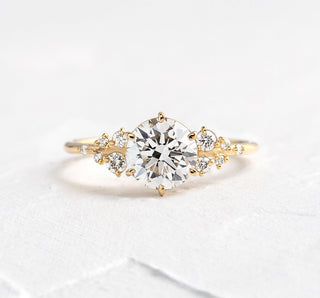


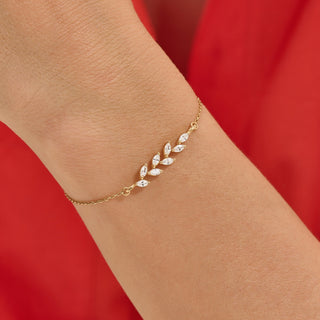

Choosing jewelry requires specific information about dimensions, color grades, and setting types before spending your money. A marquise sapphire diamond ring offers an elongated shape that maximizes visible carat weight on the finger. Buyers looking at a sapphire engagement ring often want something durable with distinct color properties. Sapphires rate a 9 on the Mohs scale. This means they resist scratches well during daily wear. The cut of the stone dictates how light interacts with the material.
Why Should You Consider Custom Engagement Rings for Women?
Finding a marquise diamond engagement ring with the exact length-to-width ratio you need in a retail display is rare. Most off-the-shelf jewelry relies on pre-calibrated stones forced into standard settings. The limitations become obvious quickly when you need specific modifications. You require a distinct color saturation for a blue sapphire ring. You want different prong styles or a specific gallery design.
We bypass standard commercial settings entirely through direct manufacturing. The metal is alloyed in our workshop to strict standards. We run the CAD models, cast the pieces, and set the stones under microscopes. There are no ready-made components assembled here. You dictate the specifications and we build the physical piece to match.
How Do You Select the Best Stones for Custom Engagement Rings for Women?
Gemstone engagement rings require careful stone inspection prior to purchase. Look at the hue, tone, and saturation. A marquise sapphire diamond ring needs bow-tie effect evaluation. This is a dark shadow across the center of the stone caused by light leaking out the bottom instead of reflecting back to the eye. A well-cut stone minimizes this shadow. Poorly cut stones show a heavy black band right across the middle. We source our stones directly from lapidaries. We examine color zoning carefully. Color zoning happens when a stone has uneven color distribution. Some parts might be dark blue while others are completely clear. You want even color across the entire face of the gem.
|
Characteristic |
Sapphire |
Diamond |
|
Mohs Hardness |
9 |
10 |
|
Refractive Index |
1.762-1.770 |
2.417 |
|
Density |
3.98-4.06 |
3.52 |
What Should You Look for in Stone Certification?
Third-party laboratory reports provide objective data about your center stones. We rely on GIA or IGI certificates for diamonds. For colored stones, AGL or GRS reports detail the origin and treatment history. Almost all sapphires undergo heat treatment to improve color and clarity. This is a permanent, industry-accepted practice. Unheated sapphires command a severe price premium. The report will state exactly what treatments the stone has undergone. You need this documentation for insurance appraisals. We supply these reports with our finished jewelry.
What Are the Maintenance Requirements for Custom Engagement Rings for Women?
Cleaning your sapphire engagement ring requires warm water and mild soap. Dirt builds up behind the stones. This reduces light return and makes the stone look opaque. A blue sapphire ring will look dull if not cleaned weekly. Prongs require checking every six months. The pointed ends of a marquise diamond ring are vulnerable to chipping if they hit a hard surface. V-prongs offer the required protection for these tips. We inspect all settings under high magnification to ensure the metal fully contacts the stone. Gemstone engagement rings hold their value when maintained properly over decades.
How Do You Match the Band Style to Your Stone?
Your band width determines if the jewelry survives daily wear. A thin band warps under pressure. A bulky band swallows the center stone completely. We keep our bands between 1.8mm and 2.2mm when setting a marquise sapphire diamond ring. This range gives you structural safety without making the piece look heavy.
Designing a sapphire engagement ring opens up several metal options, and each behaves differently. Platinum delivers maximum density. It handles physical impact well. White gold requires rhodium plating every 12 to 18 months to keep its bright white finish.
The metal you pick directly changes the stone's appearance. Yellow gold pushes warm tones right into a marquise diamond ring. If you want the deep colors of a blue sapphire ring to stand out, platinum creates the required contrast. We test these combinations on the bench before making a final recommendation. Your material choices dictate the final visual output of all gemstone engagement rings.
What Design Elements Enhance Structural Integrity?
Durability depends on how the ring is engineered. We focus on the gallery wire and the bridge of the ring. These elements connect the main setting to the band. If they are too thin, the head of the ring can snap off.
-
Prong Count: Four prongs show more of the stone. Six prongs offer better security against impact.
-
Gallery Rail: This connects the prongs halfway up. It stops the prongs from bending outward if they catch on something during your daily routine.
-
Metal Casting: We check for porosity.
-
Setting Style: Bezel settings wrap the entire edge of the stone in metal. This is the most secure option but blocks side light entirely, which changes the optical performance of the piece.
FAQs
How Do You Measure Your Ring Size Accurately?
Throw away the string and paper tricks. They stretch and give you false numbers. Get a solid metal or hard plastic ring sizer instead. Your fingers swell after a salty meal or during a hot afternoon. We always suggest taking your measurement in the middle of the day at room temperature to get a true fit.
Can You Resize These Rings Later On?
It depends entirely on the design you choose. A standard metal band usually gives you about two sizes up or down without stressing the metal structure. But if you want stones wrapping all the way around the band, sizing becomes impossible. Stretching or shrinking the metal warps the channels, and those small side stones will just pop out of the setting.
Will an Elongated Stone Catch on Your Clothes?
Those sharp points on a marquise diamond ring will grab your sweaters if the setting is weak or poorly finished. You need thick V-prongs capping those tips to protect the stone and your clothing. We grind and polish these prongs down until they are completely smooth to the touch, stopping the snagging before it starts.
Can You Mix Different Gems in Custom Engagement Rings for Women?
Absolutely. Pairing different stones changes the entire look of the piece. You might place crisp white diamonds next to a deep center stone in a blue sapphire ring to make the color pop. We sit down with you to map out which stones sit well together without scratching each other during daily wear.
Are Gemstone Engagement Rings Safe for Everyday Wear?
Some stones handle daily life better than others. Choosing a sapphire engagement ring means you get a stone tough enough to take a beating without chipping easily. If you work with your hands a lot, we build lower-profile settings so the stone sits closer to your finger and out of harm's way.