
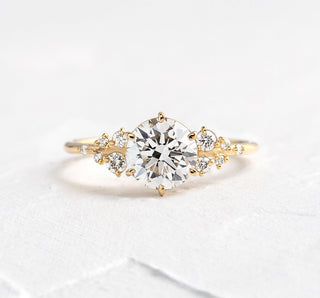



When you start looking for ring styles, the options overwhelm you quickly. The inventory at most jewelers includes hundreds of variations. Specific designs dominate sales year after year because they solve a common buyer problem. Couples want a piece of jewelry that looks substantial on the hand. If you want to know what the most popular classic engagement ring styles 2026 brings to the market, you will notice a clear demand for extra brilliance. Buyers consistently choose designs that maximize visual impact without requiring a massive, heavy center stone.
Why Do Buyers Still Choose A Classic Halo Engagement Ring?
The primary reason is simple. A classic halo engagement ring adds millimeter width to the overall face of the jewelry. You get the appearance of a much larger center section. The circle of smaller stones surrounding the main gem creates a continuous surface of light reflection. We see clients come in with a specific budget, realize what a standard one-carat solitaire looks like on the hand, and immediately shift their focus. They want more presence on the finger.
A classic halo engagement ring delivers that outcome instantly. You don't need to stretch your budget to buy a two-carat center stone when the surrounding accents do the heavy lifting for you. Many buyers struggle with metal selection during this process. If you choose white gold or platinum for the head of the ring, the diamonds blend into the metal. The entire top of the ring looks like one solid surface. We see clients make the mistake of using yellow gold prongs for the white accent diamonds. The yellow metal reflects into the stones, making the diamonds look tinted. You want the accent stones to remain colorless. Using white metal for the top setting prevents this color bleed.
How Does A Halo Diamond Ring Change The Look Of The Center Stone?
The border of accent stones alters the physical proportions. When you look at a halo diamond ring, your eye registers the outer edge of the accent stones rather than the edge of the center diamond. This optical result is a known industry standard for budget optimization.
You can see the practical differences here:
|
Feature |
Standard Solitaire |
Halo Diamond Ring |
|
Finger Coverage |
Limited strictly to the center carat weight. |
Expands outward by 2mm or more. |
|
Center Stone Protection |
Exposed edges, vulnerable to chipping against hard surfaces. |
The outer ring absorbs direct impacts. |
|
Value Perception |
Directly tied to the single stone's market price. |
Looks significantly more expensive than the total carat weight cost. |
A standard one-carat round diamond measures about 6.5mm across. When you add a seamless frame of small diamonds around it, the total width jumps to 9mm or more. You effectively get the finger coverage of a two-carat diamond for a fraction of the cost. The halo diamond ring manipulates human perception through simple geometry.
Are You Trying To Find A Halo Engagement Ring That Fits Your Exact Budget?
Pricing in the diamond industry scales exponentially. A single two-carat diamond costs vastly more than two separate one-carat diamonds. When you purchase a halo engagement ring, you bypass this pricing spike. You combine a reasonably priced center stone with affordable accent stones. The final piece looks substantial without the premium price tag attached to large single stones.
We guide our clients toward this structure when they want high visual impact but have a firm spending cap. You will find that a halo engagement ring offers the most practical path to a large-looking piece of jewelry. A buyer with a modest budget can still walk away with a ring that commands attention across a room.
What Makes The Round Halo Engagement Ring A Standard Choice?
Round cuts reflect the most light of any diamond shape due to their faceting structure. Placing a round diamond inside a circular border amplifies this light return. A round halo engagement ring is the most common request we process for clients looking for traditional aesthetics. The symmetrical shape fits perfectly within the accent border. There are no sharp corners to catch on clothing or require specialized prong placements.
The geometry of the round cut dictates the rest of the design. You have 57 facets working to bounce light back to the observer. When we set this specific shape, the surrounding frame must sit at the exact right angle. If the frame angles down too sharply, you lose the size advantage. The ring looks bulky instead of wide. If the frame sits completely flat, there is an awkward gap between the center stone and the border. A properly constructed setting eliminates that gap entirely.
You will notice certain structural benefits when selecting this specific cut.
-
The circular shape hides natural carbon spots better than step-cut stones. You can often drop a clarity grade and still get an eye-clean stone.
-
Setting times are often faster because the shape is completely uniform.
-
A round halo engagement ring sits symmetrically on any finger size. It remains a safe choice if you are buying it as a surprise.
-
The uniform edges distribute daily wear and tear evenly across the entire setting.
How Secure Is A Diamond Halo Setting For Daily Wear?
People worry about losing the small stones. The reality of a diamond halo setting is that it actually protects your main investment. The center stone sits slightly recessed or flush with the outer border in many functional designs. If you accidentally hit your hand against a door frame, the smaller, less expensive accent stones take the force of the impact. Replacing a small pave diamond costs very little. Chipping your main center stone is a major financial loss.
You get a physical buffer zone. A diamond halo setting requires standard maintenance, just like any fine jewelry you wear every day. We recommend a professional prong check every six months to ensure the tiny metal beads holding the accent stones remain tight. The structural integrity of a well-crafted piece holds up perfectly well to normal daily activities.
At Aurous, we build rings designed for actual daily wear. We focus on securing the stones and maximizing the visible surface area of your jewelry. Our team handles the technical specifications so you can focus on the final look. When you browse our collections at Aurous, you see options built on these exact structural principles.
Frequently Asked Questions
Can you resize a ring that has a surrounding border of stones?
Yes. The sizing process happens at the bottom of the band. The top setting remains untouched. If the band has diamonds going all the way around the finger, resizing becomes complicated and often requires a complete rebuild.
Do the small diamonds fall out easily?
They shouldn't. Proper manufacturing secures each stone with small metal prongs. If a stone does come loose, it usually indicates a direct impact to that specific area rather than a general flaw in the manufacturing process.
How do you clean this type of jewelry at home?
You use warm water, standard dish soap, and a soft-bristled toothbrush. You need to brush under the center stone. Dirt accumulates in the gallery underneath and blocks light from entering the pavilion of the diamond.